
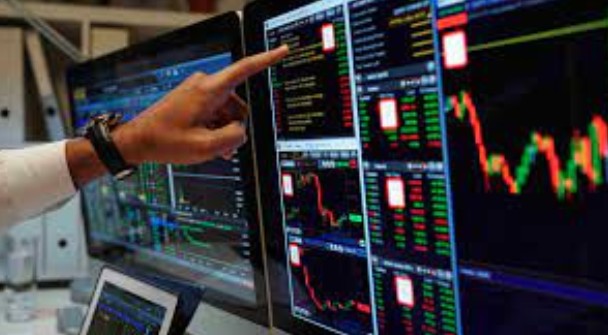

Proprietary trading or prop firms have been a critical component of financial markets for decades. Financial institutions, hedge funds, and specialized trading firms use their own capital to trade stocks, currencies, commodities, and derivatives with the goal of generating profits. These firms provide traders with great opportunities to build their careers and protect their capital as well. These firms provide capital with different trading platforms and tools for the successful execution of trades. Let’s see in detail the future of prop traders and the latest trends that can help you in the future.
The Rise of Algorithmic and High-Frequency Trading
High-frequency and algorithmic trading (HFT), have introduced some of the most significant changes in prop trading. These strategies, referred to as algorithmic or high-frequency trading, seek to outperform the competition through the use of specialized strategies that involve executing trades using complex algorithms at an incredible rate. Innovations in this field encompass the following:
- Progress in AI and Machine Learning: A significant number of firms are investing in AI-enabled algorithms whereby they capture vast amounts of market data which subsequently get analyzed in order to predict key price shifts and execute trades.
- Low Latency Infrastructure: Trading companies are pouring funds into low-latency infrastructures, such as systems utilizing high-speed fiber optic cables and direct market access, as these strategies provide a significant competitive edge due to the unprecedented speed of execution.
- Quantitative Trading Strategies: There is a noted increase in the number of prop trading firms adopting quantitative models that incorporate statistics and mathematics in trade execution.
Innovations in prop trading are expected due to changes in algorithmic trading, resulting in an increase in efficiency and innovation. This innovation also helps to pass the 2 step evaluation process.
The Impact of Regulatory Changes
The 2008 financial crisis resulted in changes in regulatory frameworks governing prop trading, the likes of which have not been seen in a long time. There have been major changes made due to regulations from government and finance watchdogs as there are important rules that are aimed at controlling irresponsible market activity through the setting of boundaries. Some key regulatory changes that affect the sector include:
Dodd-Frank And The Volcker Rule: These rules prevent banks from engaging in proprietary trading, which resulted in the growth of independent prop trading firms.
Increased Compliance Requirements: Firms are now required to follow strict reporting and transparency guidelines which creates higher operational expenses and lowers potential profit margins.
Market Surveillance and Risk Management: Regulators are now using more sophisticated systems to monitor and identify unusual trading patterns, which require firms to have effective risk management systems.
The aim of almost all supervision in the market is to ensure its stability, which, however, leads to some problems in the case of prop trading firms, as they have to face restrictions that may reduce their trading agility.
Cryptocurrency and Digital Asset Trading
The onset of cryptocurrencies and the use of blockchain technology gave rise to new opportunities in proprietary trading. Different prop trading firms have emerged and are attracted by the volatile nature and high liquidity of crypto markets. Some top trends that are seen in this space include:
- The surge in the number of dedicated crypto trading desks – more firms are establishing prop firms that deal exclusively in the trading of cryptocurrencies.
- DeFi and smart contracts – DeFi platforms and smart contracts pose unique trading opportunities without the need for intermediaries, resulting in creative trades.
- Regulatory uncertainty– Prop traders face both opportunities and risks due to the absence of clear laws governing cryptocurrency trading.
Prop trading companies will have to handle regulatory challenges as the cryptocurrency market develops while utilizing blockchain technology to increase trading effectiveness.
The Role of Big Data and Analytics
It is clear that prop traders are realizing the importance of data-driven decision-making. The myriad of trends emerging in this area includes: the ability to analyze massive datasets in real-time which provides a competitive edge, traders utilizing unconventional data sources like web traffic analysis and social media sentiment, and satellite imagery to predict market trends along with the use of cloud-based platforms to efficiently store and process high volumes of trading data in real-time. Instead, best prop firms are also leveraging advanced analytic tools that enable traders to identify patterns and execute trades with high accuracy. The constant integration of analytics and big data into trading strategies is sure to propel innovation and profitability in the industry.